ServicesGrading
Grading in Greenville
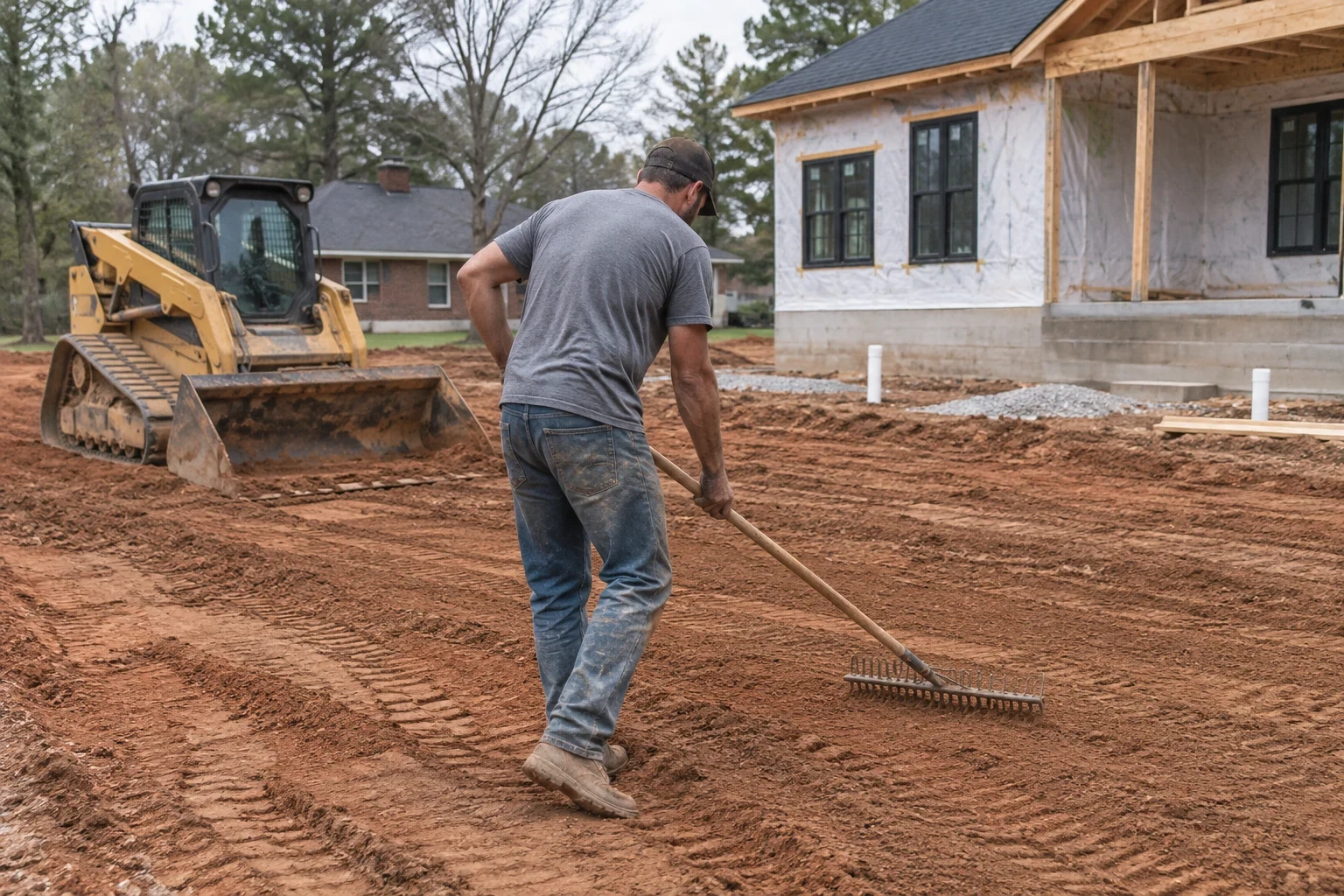
We shape the ground under and around your house so water runs away from the foundation, the building pad sits at the right height, and slopes hold through a hard storm. That covers new lots ready for a custom home build and existing yards where water has started causing trouble.
What grading does and when it is the right call
Grading sets the elevation and slope of the soil on a lot. On a new build, that means cutting and filling to a level building pad, compacting the fill so the foundation does not settle, and establishing a finish grade that falls away from the house. On an existing home, it usually means correcting a yard that sends water toward the crawl space or slab.
Much of the Upstate sits on red clay that sheds water fast when compacted and turns slick and weak when saturated. That behavior shapes how we work. We check how the soil holds, compact it at the right moisture, and plan where the runoff will go before the first bucket of dirt moves.
If your lot still has trees and brush, land clearing comes first. If the grading is part of a new house, it ties directly into our foundation work and custom home building.
What our grading work covers
Building pad cut and fill
We cut high spots and place fill to bring the pad to the elevation on your site plan. Fill goes down in thin lifts, each one compacted, because a single deep dump of loose clay will keep settling under a footing for years.
Positive drainage slope
Finish grade should fall away from the foundation, typically about six inches over the first ten feet. We set that slope with a laser level so it is measured, not eyeballed.
Swales and runoff paths
Shallow swales carry water around the house toward the street or another safe outlet. We shape them wide and gentle so they can be mowed and do not erode.
Driveway and walkway subgrade
A driveway is only as good as the ground under it. We grade and compact the subgrade and set the cross slope so water leaves the surface instead of pooling.
Topsoil and erosion control
We strip and stockpile usable topsoil before cutting, then spread it back over the finish grade. Silt fence, seed and straw keep bare clay from washing into the street while the yard takes hold.
Signs your lot needs grading
Water standing at the foundation
If puddles sit along the wall a day after rain, the grade is flat or tilted toward the house. That water soaks the soil under the footing and finds its way inside.
A damp or musty crawl space
Moisture, white mineral deposits on block piers, or a sour smell under the house often trace back to surface water rather than plumbing. Fixing the slope outside usually costs less than drying the space over and over.
Gullies and exposed clay
Channels cut into the yard after a heavy afternoon storm show where water is concentrating and moving too fast. Left alone, they deepen every season.
Settled patios or walks
Concrete that has tipped toward the house traps water at the foundation line. Often the fill under it was never properly compacted.
A new lot on a slope
Before a foundation or framing can start, a sloped lot needs a pad cut and a drainage plan. Skipping that step is how houses end up with wet crawl spaces and retaining walls nobody budgeted for.
How a grading job runs
- 1
Walk the lot and read the water
During your consultation we look at where water enters and leaves the lot and check existing elevations. On a new build we work from your survey and house plans.
- 2
Set the plan and the paperwork
We mark finish elevations and swale lines and tell you which permits apply. Grading that disturbs a larger area can require stormwater and land disturbance review, so we account for that before scheduling equipment.
- 3
Strip, cut and fill
Topsoil comes off first. Then we cut high ground and build up low ground, compacting each thin lift of fill and testing as we go. We avoid working clay when it is soaked, because compacting wet clay traps water and leaves a soft pad.
- 4
Finish grade and stabilize
We laser-check the final slope, spread topsoil and put down seed and straw or other erosion control. Before we leave, we walk the site with you and show you where the water will run.
What moves the cost of grading
No two lots carry the same soil, slope or water pattern, so we price grading only after walking the ground with you. During your project consultation we explain the scope and point out which conditions are pushing the number up or down. The factors below usually carry the most weight.
- How much soil moves
- Cut and fill volume is the biggest driver. A lot that balances, where soil cut from high ground fills the low ground, costs less than one that needs fill trucked to the site or spoil hauled away.
- Soil condition and rock
- Clay that has to dry out before it can be compacted adds time. Buried rock, stumps or old debris uncovered during the cut add equipment hours.
- Slope and access
- Steep lots need smaller machines, more passes and sometimes retaining. A narrow entry or established landscaping that has to be protected slows the work.
- Drainage features and permits
- Swales, extra erosion control and any required permit review add material, labor or time, depending on how much ground is disturbed.
Grading questions we hear
Something not covered here? (864) 896-8814
Can you grade after a lot of rain or in winter?
Yes, but we schedule around wet weather. Clay compacted while saturated never reaches proper density, so we wait until the soil dries to a workable moisture. A few days of patience prevents a pad that settles under your foundation.
Will grading fix the water in my crawl space?
When the water comes from surface runoff, correcting the slope is often the main fix. If it comes from groundwater or a plumbing leak, grading alone will not solve it. We will tell you which one we see during the consultation rather than sell you dirt work you do not need.
Do I need a permit for grading?
Minor regrading around an existing house often does not need one. Larger disturbance, such as preparing a new home site, can trigger county stormwater and land disturbance requirements. We explain what applies to your lot and handle the steps that fall to us.
What happens to my lawn?
Grass in the graded area is lost. We save and replace the topsoil, then seed and straw it. Expect a few weeks before new grass fills in, and longer in the heat of midsummer.
Do you grade lots outside the city?
Yes. We work across the Greenville area, including Greer, Simpsonville, Taylors, Mauldin and Five Forks. The consultation process is the same wherever your lot is.
Find out what your lot needs
Tell us about the lot or the water problem, and we will set up a project consultation to look at the ground in person. You get a clear explanation of the work and what drives the price.