ServicesLand Clearing
Land Clearing in Greenville
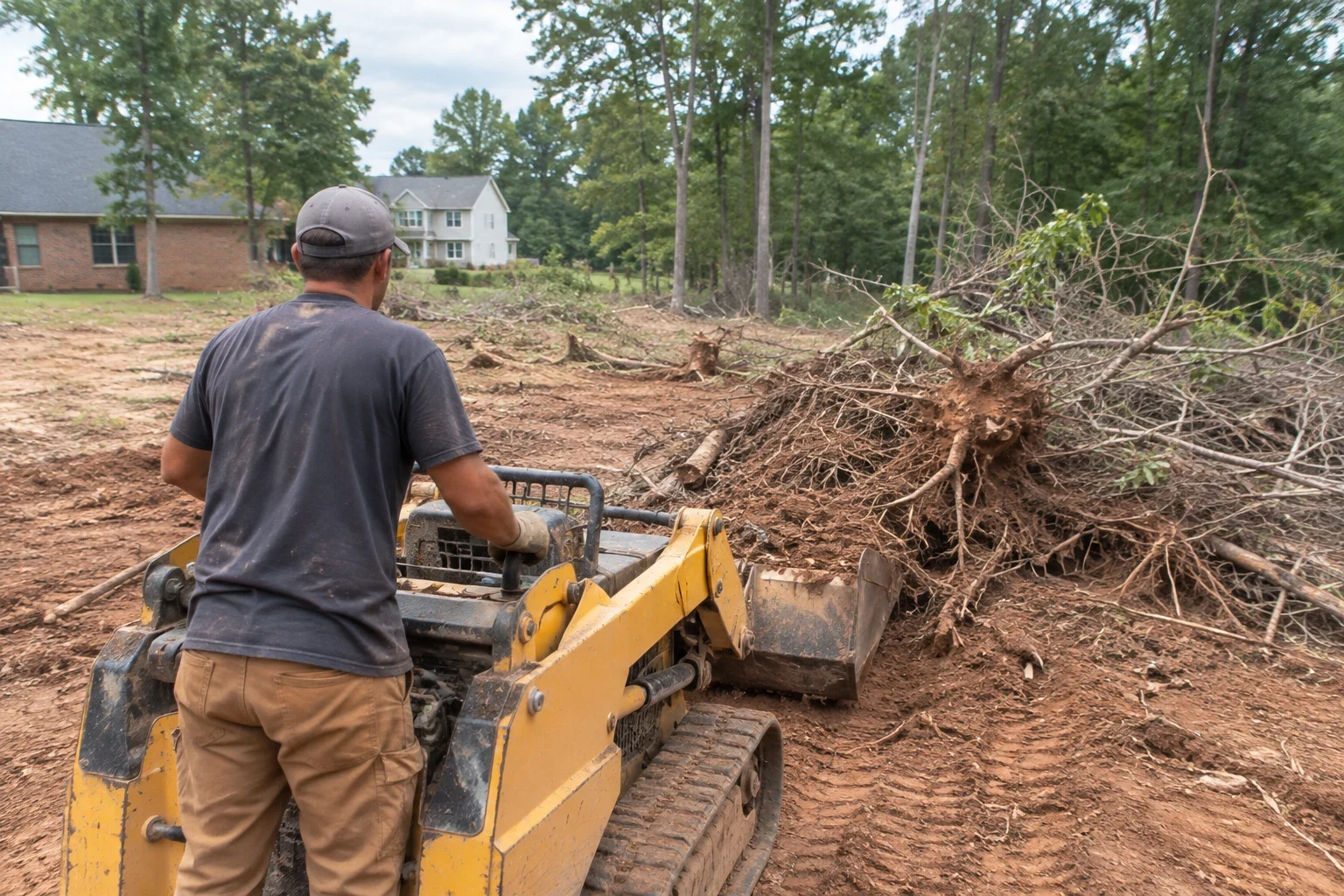
We clear wooded and overgrown lots so a custom home can be built on solid ground. That means removing trees, stumps and the root mat where the house will sit, protecting the trees you keep and leaving the site ready for grading.
Clearing a Lot the Way the House Needs It
Land clearing is the first physical step of a build. It is the right call when you own land and want a custom home, a large addition or a detached garage, and the spot you picked is covered in trees, brush or old fill. It is also the step that most often gets rushed, and mistakes made here show up years later as settling and drainage trouble.
We clear with the floor plan and site plan in hand. The footprint of the house, driveway and septic or utility runs get full removal, including stumps and roots. Areas outside the footprint get selective clearing so you keep shade, privacy and the trees worth saving.
Upstate red clay holds water and turns slick after rain, so we set silt fence and a stone construction entrance before heavy equipment moves soil. That keeps mud off the road and sediment out of nearby ditches and creeks.
What Our Land Clearing Covers
Marking and tree selection
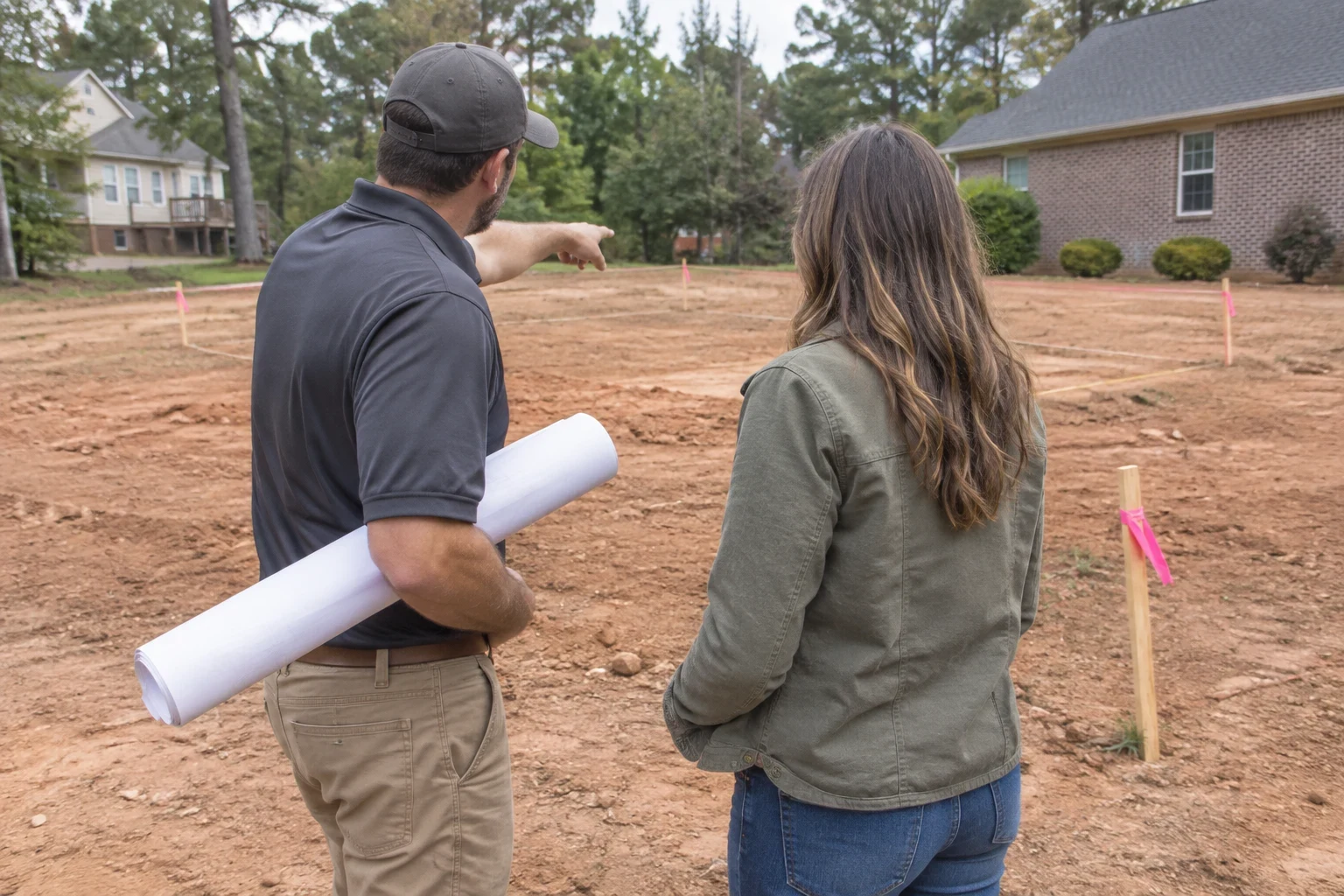
We walk the lot with you, stake the house corners and flag the trees to keep. Keepers get fencing at the drip line so equipment does not compact their roots.
Tree and brush removal
Pines, hardwoods, privet and vine growth come down and are cut, chipped or hauled. Usable logs and chips can stay on site if you want them for mulch or firewood.
Full stump extraction under the footprint
Under the house, garage and driveway we pull stumps and root balls instead of grinding them. Buried wood rots, leaves voids that let soil settle and attracts termites, so it does not belong under a slab or footing.
Stump grinding in yard areas
Where nothing will be built, grinding below grade is faster and leaves the surrounding soil undisturbed.
Topsoil stripping and stockpiling
We strip the organic layer from the build area and pile it to the side. It is too soft to build on, but it is worth keeping for final landscaping.
Erosion and sediment control
Silt fence, inlet protection and a gravel entrance pad go in before major soil is disturbed, sized to the slope and the area being opened up.
Signs Your Lot Needs Clearing First
- Trees inside the house footprint
- If any trunk stands within about ten feet of where a wall will go, it and its main roots have to come out before footings are dug.
- Dense undergrowth you cannot walk
- Thick privet, briars or kudzu hide grade changes, old debris and soft spots. A survey crew and a soil tester both need clear access.
- Old fill, dump piles or buried debris
- Rural lots often have old burn piles, tires or construction scrap. These have to be dug out and hauled before the ground can carry a foundation.
- Dead or leaning trees near the build
- Trees with heavy lean, root damage or dead tops become a hazard once equipment loosens the soil around them. Removing them now is safer and cheaper than after the roof is on.
- No room for equipment or deliveries
- Concrete trucks and lumber deliveries need a firm, clear path. If one cannot reach the build area, the access route needs clearing too.
How a Clearing Job Runs
- 1
Consultation and site walk
We start with a phone call about your lot and plans, then walk the property. We look at slope, tree size and species, drainage paths, access and where the house will sit.
- 2
Utility locates and permits
We request SC 811 locates before any digging and confirm what land disturbance and stormwater permits the project needs. Larger disturbed areas require an approved erosion control plan before work starts.
- 3
Erosion control and access
Silt fence goes in along the low side of the work area and a stone pad goes at the entrance. Tree protection fencing goes up around the keepers.
- 4
Cutting, extraction and haul-off
Trees come down first, then stumps and roots are pulled from the footprint and ground elsewhere. Debris is chipped or hauled, and topsoil is stripped and stockpiled.
- 5
Walkthrough and handoff to grading
We walk the cleared lot with you, point out anything we found, such as soft soil or buried debris, and leave the site ready for grading and foundation layout.
What Moves the Cost of Land Clearing
No two lots clear the same way, so we price after seeing the ground. Your estimate is written line by line so you can see what goes to cutting, stump work, hauling and erosion control. These are the factors that change it most.
- Tree size and density
- A lot of scattered pines clears much faster than one with mature oaks and hickories. Large hardwood stumps take far more effort to extract.
- Area cleared and how much stays
- Clearing only the footprint and driveway costs less than clearing the whole parcel. Selective work around keeper trees takes more care and time.
- Slope and access
- Steep ground needs more erosion control and slower equipment work. A narrow or soft entrance can limit the machines that fit.
- Debris handling
- Chipping and leaving material on site costs less than trucking everything off. Buried trash or old fill adds disposal costs.
- Permits and erosion control
- The size of the disturbed area sets what permits and controls are required, and those are part of the price.
Land Clearing Questions
- Can you grind the stumps under the house instead of pulling them?
- We advise against it. Grinding leaves the root system in the ground, and those roots decay over several years while the soil above them slowly drops. Under footings or a slab that settling turns into cracks and uneven floors, so we extract stumps completely inside the footprint and save grinding for yard areas.
- Will you save the trees I want to keep?
- Yes, if they are healthy and sit far enough from the work. We put fencing at the drip line so trucks and spoil piles stay off the root zone. A tree right at the edge of a foundation dig usually loses too many roots to survive, and we will say so plainly during the site walk.
- Is a permit required before the trees come down?
- That comes down to how many acres get disturbed and which jurisdiction your parcel falls under. A small clearing for the house footprint is often covered by the building permit. Open up more ground and you may need a land disturbance or stormwater permit plus an approved erosion control plan. We check what your parcel requires before any equipment shows up.
- What happens to the cut trees and brush?
- Brush goes through the chipper, and logs can be bucked and stacked for you if you want firewood. Whatever you do not keep gets hauled off. Leaving chips on site for mulch can trim the hauling part of the estimate.
- How soon after clearing can grading start?
- Usually right away, because we plan clearing and grading as one sequence. If a heavy rain soaks the clay, we let it firm up first so equipment does not rut and overcompact the site. Our grading page covers how we shape the pad and drainage from there.

Get Your Lot Ready to Build
Tell us about your land and what you plan to put on it. We will walk the site, explain what has to come out and what can stay, and give you a written estimate.