ServicesSiding Installation
Siding Installation in Greenville
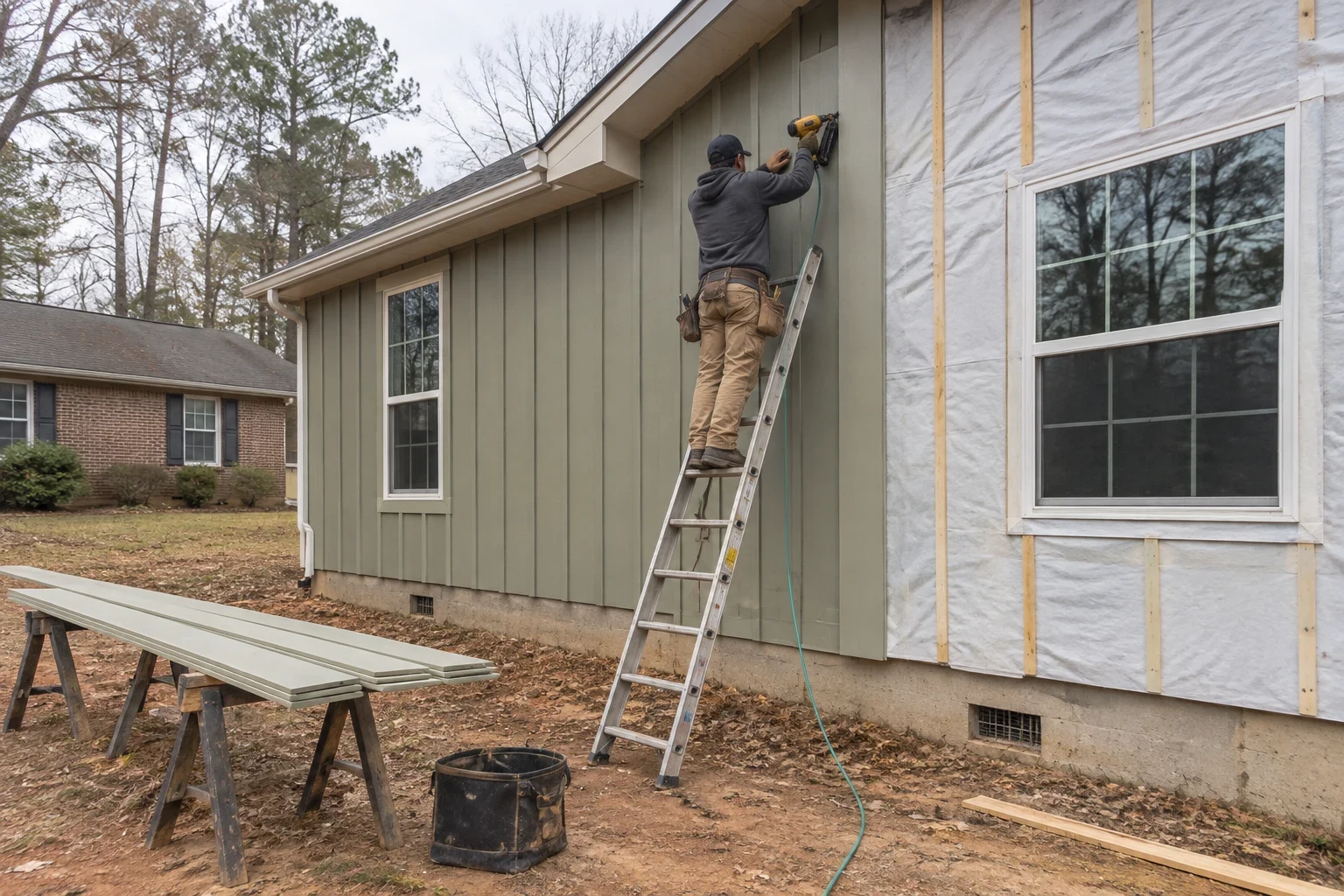
We strip worn siding, fix what is rotten underneath and install new vinyl, fiber cement or engineered wood with the wrap, flashing and clearances each product needs. The result is a wall that sheds rain instead of holding it.
Siding Is a Water System, Not a Coat of Paint
The panels you see are only the first layer. Behind them sit a weather-resistive barrier, flashing at every window, door and roof line, and the sheathing nailed to your framing. Most siding failures we find start at one of those hidden parts: a missing kick-out flashing at a roof-to-wall joint, a window head with no drip cap, or wrap that was cut and never taped.
Here, long humid summers and heavy spring rain keep walls damp for weeks at a time, so small installation shortcuts turn into soft OSB and mildew faster than they would in a dry climate. We install siding with that in mind, and we treat the job as part of the house, not just a cladding swap.
We handle siding on new builds through our custom home building work and on existing houses as a stand-alone exterior project or alongside a larger home remodeling job.
What Our Siding Installation Covers
- Removing and checking the old siding
- The existing siding comes off down to the sheathing so the wall itself is in plain view. We photograph anything we turn up, such as rot, insect damage or old leaks, and share it with you.
- Repairs to sheathing and framing
- We cut out OSB or plywood that is soft or coming apart and put in new sheets. When water has reached a stud or the sill plate, we show it to you before fixing it and explain the cause.
- Wrap and flashing
- House wrap goes on from the bottom up, each course overlapping the one below, with taped seams, flashing tape and metal head flashing around openings. Anywhere a roof edge runs into a wall, we add kick-out flashing.
- New siding, trim and soffit
- Starter strip, corner posts, J-channel and the panels or planks go up, then trim, soffit and fascia where the job includes them. Every product is nailed and gapped the way its manufacturer requires.
- Final cleanup and walk-around
- We sweep the yard with magnets to pick up nails and haul the old material away. Then we go around the house with you before the job is finished.
Signs Your Siding Needs Replacing
Panels that are warped or loose
Vinyl that buckles in summer was usually nailed too tight to move. Once panels pull off their locks, wind-driven rain gets behind them.
Soft spots or swelling
Press on the lower courses near grade and under windows. Swollen edges on hardboard or wood mean water has been wicking in for a while.
Mildew that keeps coming back
Green or black growth on a shaded wall after every wash often points to moisture trapped behind the siding, not just on its face.
Stains or peeling paint inside
Water marks on drywall below a window, or paint that bubbles on an exterior wall, can trace back to failed flashing outside.
Old siding over a remodel
If you are adding a room or replacing windows, matching discontinued siding is often harder than re-siding the whole elevation.
How a Siding Job Runs
- 1
Visit and measuring
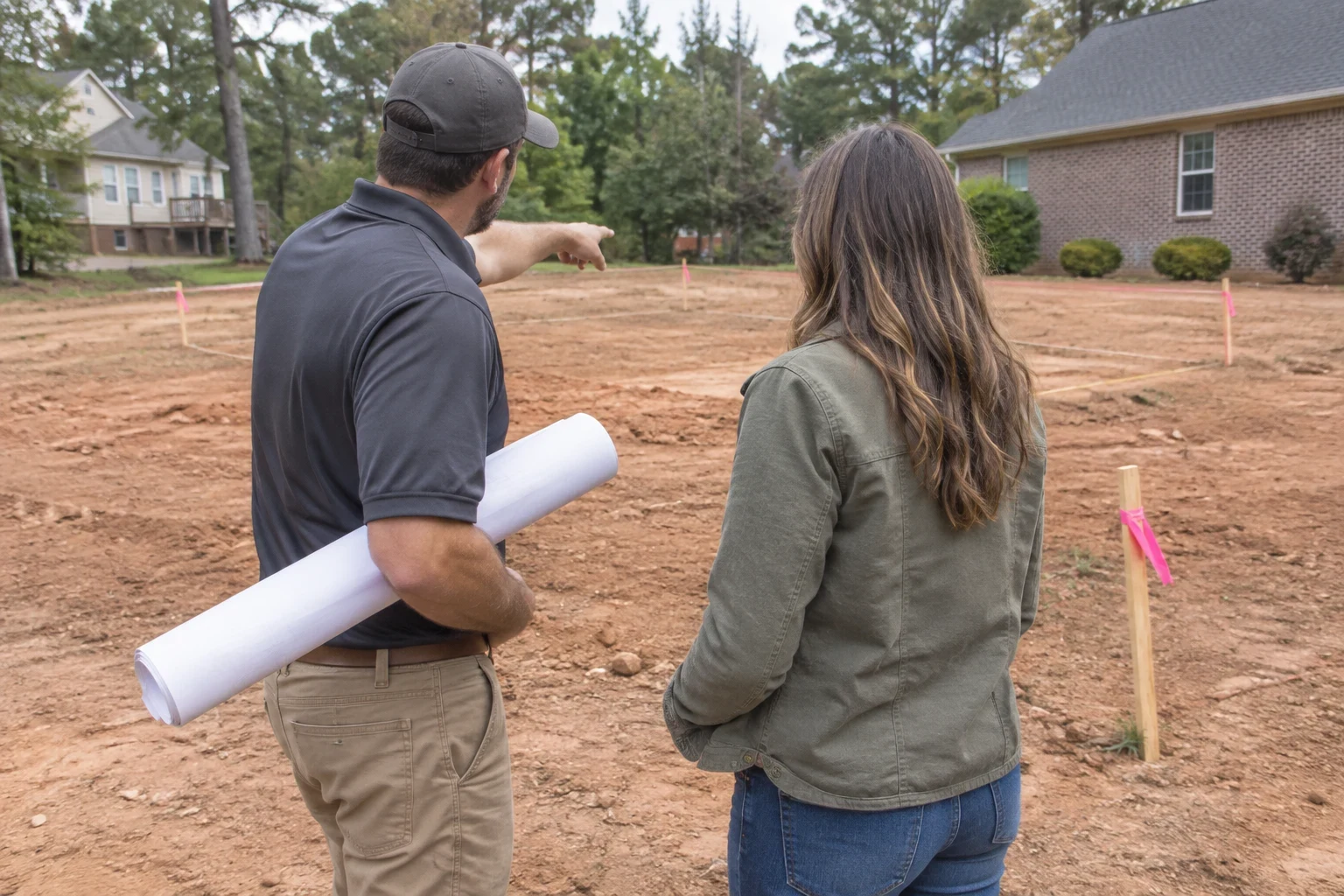
We go over each wall, check the common rot spots and discuss which materials suit your house and budget. You receive a written estimate broken out line by line.
- 2
Permits and materials
We find out if the job needs a permit and pull it if so. Materials are ordered once color and profile are confirmed in writing.
- 3
Protecting the property
Plants, AC units and walkways get covered and a spot is set aside for debris. We then take the house one side at a time, so no wall sits open overnight without wrap.
- 4
Installation and final check
Repairs come first, then wrap, flashing and siding, then trim and caulk where the product requires it. We close out with the walk-around and any inspection the job needs.
What Moves the Price of a Siding Job
Two things set most of the number: how many square feet of wall we are covering, and what turns up once the old cladding comes off. That second part stays partly unknown until tear-off. Our written estimate lists the planned work item by item and spells out how we would price any hidden repair, and we talk it through with you before that repair starts.
- Material choice
- Vinyl is the least expensive to buy and hang. Fiber cement and engineered wood carry a higher material cost and take more labor to cut and fasten, and fiber cement usually needs a painted finish.
- Wall area and height
- Gables, steep slopes and second-story walls call for staging or a lift. That setup adds labor hours to the job.
- Condition underneath
- Rotted sheathing, a damaged sill plate or signs of old leaks add repair work. On houses built before 1978, lead paint may be present, and that changes how the old siding has to come off.
- Trim and openings
- Every window, door and corner adds flashing and cuts. New soffit, fascia or wrapped window trim widens the scope as well.
Siding Installation Questions
Something not covered here? (864) 896-8814
What siding lasts longest in this humid climate?
Each of the three main products performs well when it is put up correctly. Fiber cement stands up to rot and insects and will not melt beside a grill, though it needs repainting over the years. Vinyl asks for the least maintenance but has to hang loosely so it can expand in summer heat. Engineered wood comes nearest to the look of real wood, and its cut ends must be sealed.
Can the new siding go right over the old?
It can, but we rarely recommend it. Old siding left in place conceals rot and makes proper window flashing difficult. Taking it off lets us repair the wall and start over with a fresh water barrier.
How many days does a siding job take?
Most one- or two-story homes take from several working days up to a couple of weeks, based on the size of the house, the material and the amount of repair we find. Rain can stop work while walls are open. We set a schedule at the consultation and adjust it if conditions change.
Why is fiber cement kept off the ground?
Cut edges of fiber cement soak up water. The makers call for clearance above soil, patios and roof lines so the lower edge can dry out. Red clay splashing up in heavy rain is one more reason we keep that space clear.
Does someone have to be home while you work?
No. We need to use the outdoor outlets and walk all the way around the house. We ask that you clear items away from the outside walls, and we give you notice before the loud tear-off work starts.
Get Your Walls Looked At Before the Next Wet Season
A project consultation covers what is behind your current siding, which material suits your house and what the work would involve. Get your quote by phone and we will set up a time to measure.